+8801939912301
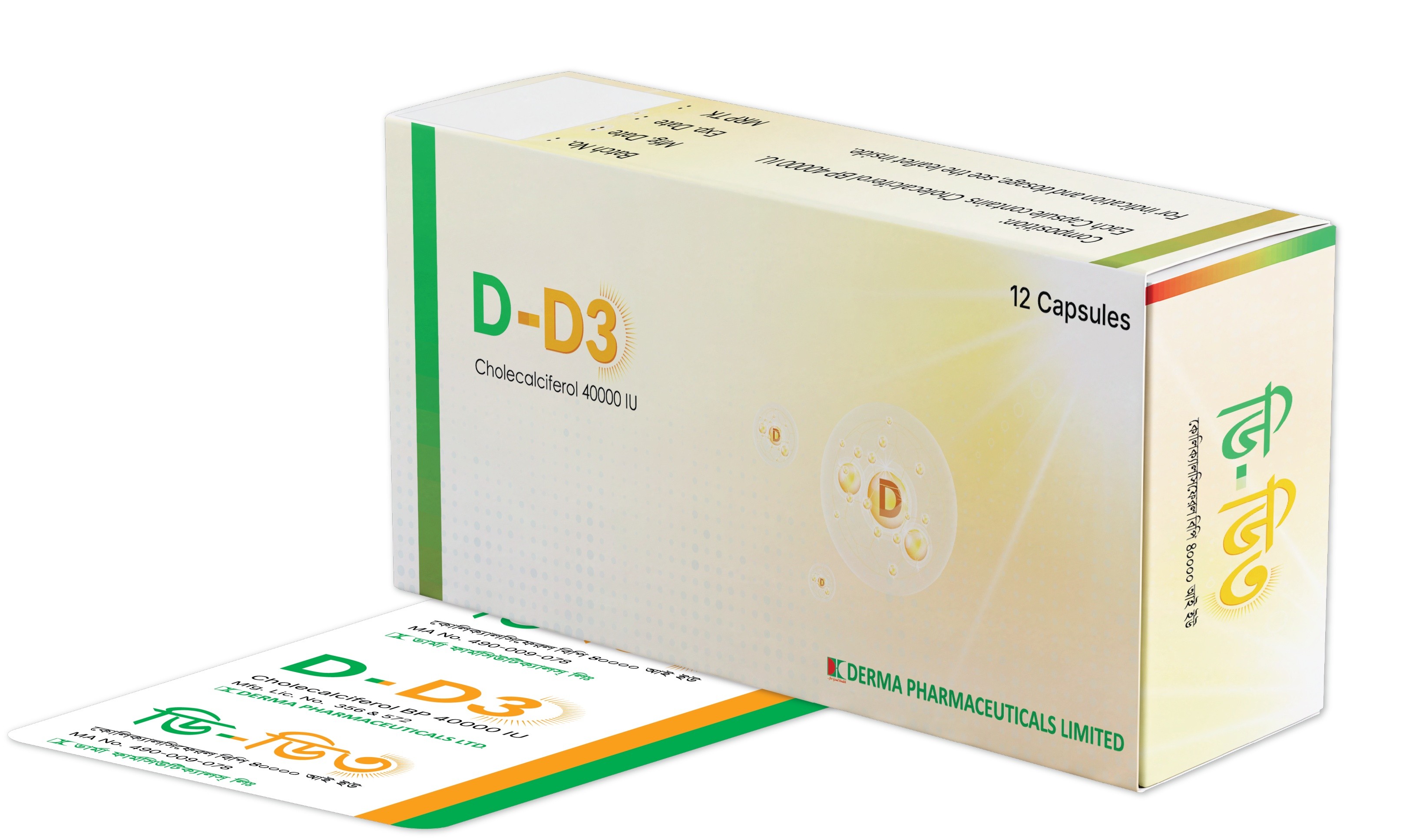
Composition:
• D-D3 Capsule: Each capsule contains Cholecalciferol BP 40,000 IU.
Pharmacology:
• Vitamin D3 metabolites promote the active absorption of calcium and phosphorus by the small intestine, thus elevating serum calcium and phosphate levels sufficiently to permit bone mineralization.
Indications:
• Prevention and treatment of Vitamin D3 deficiencies.
• Osteoporosis.
• Osteomalacia.
• Hypocalcaemia.
• Tetany.
• Rickets.
• Preeclampsia.
• Eclampsia.
• Prediabetes.
Dosage & Administration:
Adults:
• Treatment of Vitamin D3 deficiency: 40,000 IU/week for 7 weeks, followed by maintenance therapy (1400–2000 IU/day).
• Prevention of Vitamin D3 deficiency: 20,000 IU/month.
Children (12–18 years):
• Treatment of Vitamin D3 deficiency: 20,000 IU once every 2 weeks for 6 weeks.
• Prevention of Vitamin D3 deficiency: 20,000 IU once every 6 weeks.
Syrup:
• Prevention of Vitamin D3 deficiency:
- 0–1 year: 400 IU/day (2 ml).
- >1 year: 600 IU/day (3 ml).
• Treatment of Vitamin D3 deficiency:
- 0–1 year: 2000 IU/day (+50,000 IU/week) for 6 weeks.
- 1–18 years: 2000 IU/day for 6 weeks.
Contraindications:
• Hypersensitivity to Cholecalciferol or any of the excipients in the product.
• Hypervitaminosis D.
• Nephrolithiasis.
• Diseases or conditions resulting in hypercalcemia and/or hypercalciuria.
• Severe renal impairment.
Side Effects:
• Excessive administration of this drug may lead to hypercalcemia and hypervitaminosis.
• Hypervitaminosis may be characterized by fatigue, loss of appetite, headache and slimming, retardation of growth, nausea, vomiting, excess of urine, intense thirst and arterial hypertension.
Warning & Precaution:
• Caution is required in patients receiving treatment for cardiovascular disease, as administration of Cholecalciferol may increase the risk of digitalis toxicity (arrhythmia).
• Cholecalciferol should also be prescribed with caution in patients with sarcoidosis.
• Cholecalciferol should be used with caution in patients with impaired renal function.
• The effect on calcium and phosphate levels should be monitored.
Use in Pregnancy & Lactation:
Pregnancy:
• Vitamin D3 needs are increased during pregnancy.
• Vitamin D3 deficiency during pregnancy can affect bone development and immune function from birth through adulthood.
• Low Vitamin D3 levels are common among those taking a standard prenatal multivitamin, which usually contains 400 IU, but is inadequate for pregnant women.
• Even 800 IU of Vitamin D3 per day did not permit most pregnant women to reach a normal Vitamin D3 level.
• A study funded by the National Institutes of Health tested the safety and effectiveness of 4000 IU Vitamin D3 per day in pregnant women.
• The researchers reported that this dose was safe and effective in achieving normal Vitamin D3 levels and resulted in fewer pregnancy complications compared with 400 IU Vitamin D3 per day.
Lactation:
• Cholecalciferol and its metabolites are excreted in breast milk.
• Overdose in infants induced by nursing mothers has not been observed.
• The American Academy of Pediatrics (AAP) currently recommends that breastfed infants receive a supplement of Vitamin D3 every day to prevent Vitamin D3 deficiency and rickets.
Drug Interactions:
• Increased risk of hypercalcemia if given with thiazide diuretics, calcium or phosphate.
• Antiepileptics such as carbamazepine, phenobarbitone and phenytoin may increase Vitamin D3 requirements.
• Rifampicin and isoniazid may reduce the efficacy of Vitamin D3.
• Corticosteroids may counteract the effect of Vitamin D3.
• Digoxin or any cardiac glycoside may interact with Vitamin D3.
• Reduced absorption may occur when taken with cholestyramine, colestipol, mineral oil, orlistat and ketoconazole.
Overdose:
• Overdose symptoms may include headache, weakness, drowsiness, dry mouth, nausea, vomiting, constipation, muscle or bone pain, metallic taste in the mouth, weight loss, itchy skin, changes in heart rate, loss of interest in sex, confusion, unusual thoughts or behavior, severe pain in the upper stomach spreading to the back or fainting.
Storage:
• Store below 25°C.
• Protect from light and moisture.
• Store in a dry and cool place.
• Keep out of reach of children.
Packing:
• D-D3 Capsule: Each box contains 12 capsules in Alu-Alu blister pack.